
Where has the far-left gone?
Precision in language is important. Calling anyone slightly right of the moderate left - 'far right' - while rarely challenging those clearly on the far-left, is degrading our democracy.

Do you believe in law and order? Believe that being proud of your country is a good thing, and that managing who migrates here is prudent? Think children having a mum and dad is preferable? Can you define what a woman is? Are you perhaps skeptical of climate change alarmism or believe in free speech?
Well, congratulations, you are officially far-right according to various media commentators. Some would even term you ‘right right’, which is a rather odd expression, but this was literally the term a political commentator from Australia used when being interviewed on One News.
This has all come about after the recent by-election in Australia, which saw a safe Liberal seat (in fact, held by the former leader of the Liberal Party, Sussan Ley) switch decisively to Pauline Hanson’s One Nation Party.
Simultaneously, in the United Kingdom, the Reform Party led by Nigel Farage has wiped the floor of the two major political parties – Labour and Conservatives – during the recent council elections. To use just one statistic from England, Reform had only two council seats prior to the election; they now have 1,423 – almost a third of the total number of council seats in the country.
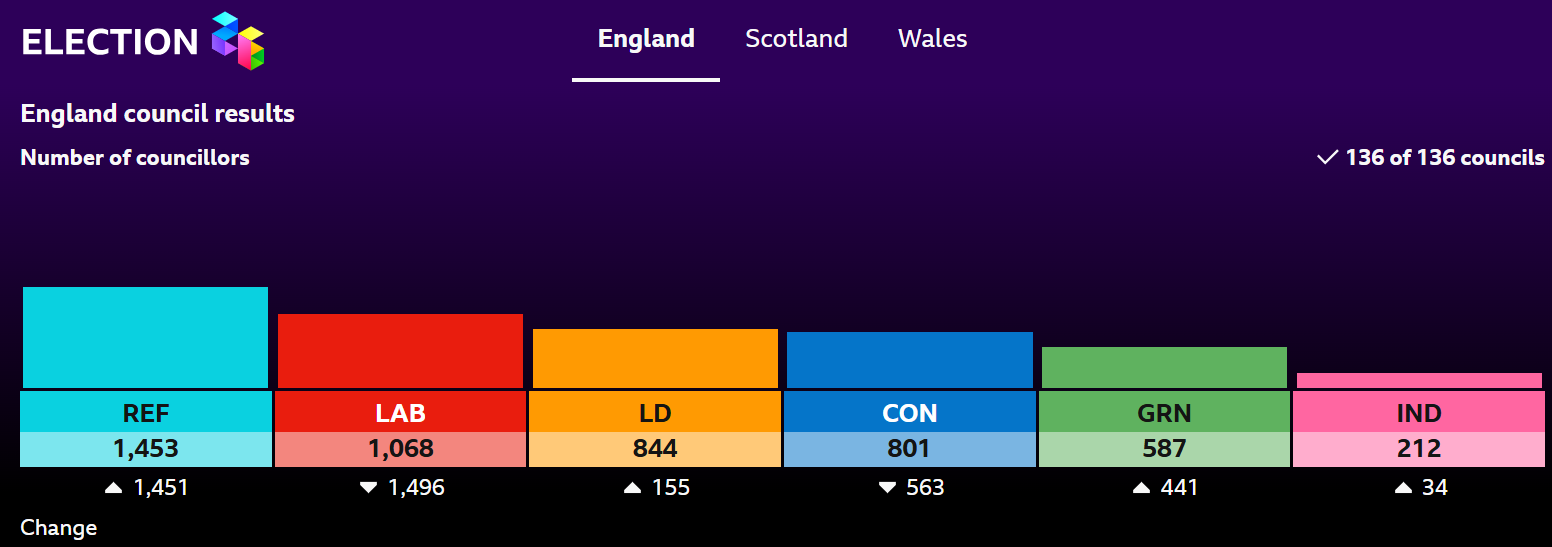
These two wins have the commentariat warning people of the rise of the far-right, with some suggesting the likes of New Zealand First is the equivalent here.
You do not need to agree or like Pauline Hanson or Nigel Farage, but their positions are demonstrably not ‘far-right’. To the extent anyone suggests they are, then it is more a reflection on that commentator’s preference for the extreme left. As variants of the Overton Window illustrates, many on the left have gone so far off-piste, that any position right of the moderate left is now deemed ‘far right’.
But what is most striking to me is these same commentators rarely, if ever, labelling anything on the left of politics as ‘far-left’.
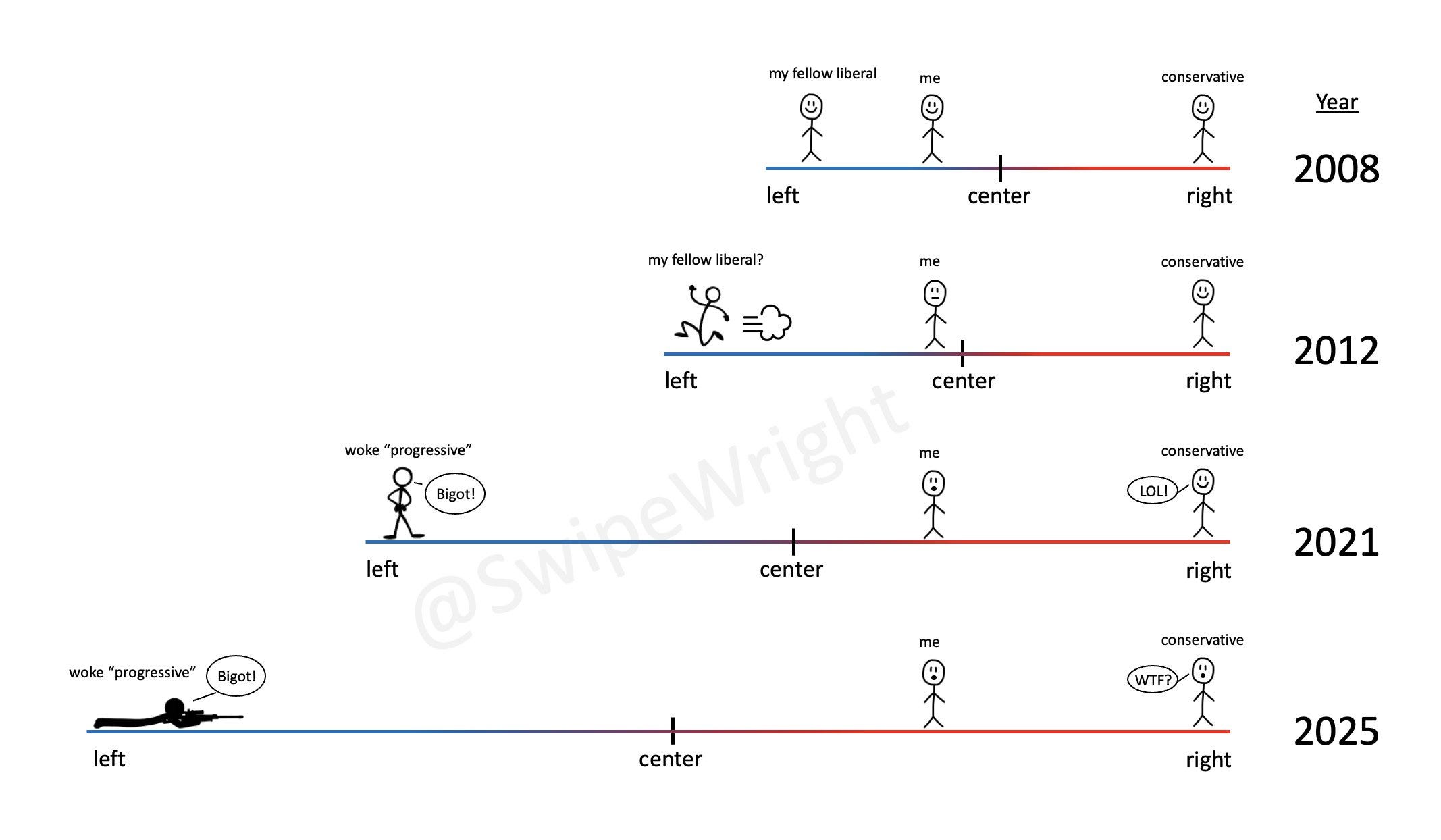
I would suggest we have some obvious examples of far-left expressions here in New Zealand, notably from the Green Party and the likes of the Māori Party.
In a recent Q+A interview, a Green Party candidate, Tania Waikato was given a free hand to talk about her views around the Treaty of Waitangi. These views included that Māori never ceded sovereignty to the Crown, that the Treaty should become the highest constitutional law of the land, and that, in effect, the entire democratic system of New Zealand needs to be dismantled. Now, you may or may not agree with her – but these beliefs are radical and clearly far-left. They are far more ‘extreme’ than a person who believes it is ok to be proud of one’s country. Despite this, the term far-left is never used of her or the Green Party.
To further illustrate the issue, we can look at the host of other Green policies which accord with the far-left, notably their call for a host of new taxes – a wealth tax, inheritance tax, and even a tax on private jets. Again, you may think these are great policies but the point is that they classically far-left positions and yet they are never termed as such by commentators.
However, suggest that free speech is a key democratic value or that we need to control the border, then the commentariat will swiftly label you as far-right and dangerous.
The inconsistency and double standard are galling.
I’m not arguing that everything should be framed as far-left or far-right. In fact, use of these terms is not overly helpful in modern discourse. They once had meaning and purpose, but with far-right in particular being thrown around with liberal abandon, it no longer has the accurate value it once did.
It is the same with words such ‘racist’, ‘bigot’, ‘genocide’ and more. By inaccurately over-using these terms, we lose the ability to properly identify and critique situations and viewpoints. Modern discourse is making terms like far-right meaningless and as a consequence we are losing a means to purposefully identify the extremes.
To paraphrase: if everything is far-right, then nothing is.
It is not just the left and right dichotomy though. I recall during my political years that often stories involving me would include the prefix ‘conservative’ or sometimes ‘former trainee Catholic priest’. Now neither was incorrect, but what was striking is that such labels were rarely applied to others. I struggle to recall prefixes such as communist, Marxist, anarchist, or libertarian being applied by media to other MPs. Alongside this, as Newstalk ZB host, Heather du Plessis-Allan, has noted (listen below) is the framing of some stories as “controversial” - a deliberate signal that whatever or whoever is about to be reported on has failed an unspoken ideological test.
Precision in language is important in a democracy. Despite the language manipulations in play by many in media and various activists, we must aspire to be clear, precise, and consistent in our choice of words.
As another old adage notes: if you never say what you mean, you will never mean what you say.
Once upon a time we used to call a person of their character. Now we, or rather the media, and vocal activists frame a person in terms of their political identity.
The shift is deliberate, to devalue our insights.
Development of character is foundational in children, and is nurtured by parents and society.
We build everything else while we grow.
Character development, basic humanity and our connection with eachother gives us a ticket to a rich life.
Labels divide, character develops.
(*We're all far-right now.*)
https://youtu.be/LsbRrTULpgA?si=IlNOHUaX1iubfRJ8
Thanks for the article, Simon.
I really enjoyed this article Simon, I just hope that somehow we can move past the simplifying, polarising "identity politics" where you need to have an "identity" in order to speak on anything. It removes nuance and deep consideration of ideas, as you can simply dismiss an argument based on someone's "prefix" i.e. conservative, far left etc. You don't even need to counter the argument as your background, associations or experiences (things you may have no control over) disqualify your ability to have an opinion. The parallels of identity politics with racism are interesting.
I distinctly remember talking to you about whether joining the priesthood was clambering on to a sinking ship and I know that you had a nuanced position about it that most definitely doesn't reflect the pejorative use of that fact when it is applied as "former trainee catholic priest" speaks on 'Topic X'. I'm constantly frustrated by the inability for people, particularly on the right and centre of politics to change or evolve their opinions and thoughts, with minor social media posts and ideas from sometimes decades ago dragged up to discredit people.
I'm hoping for a revolution in politics as I can't see how an evolution can really resolve the issues we currently have. I just wonder how and when this will happen.